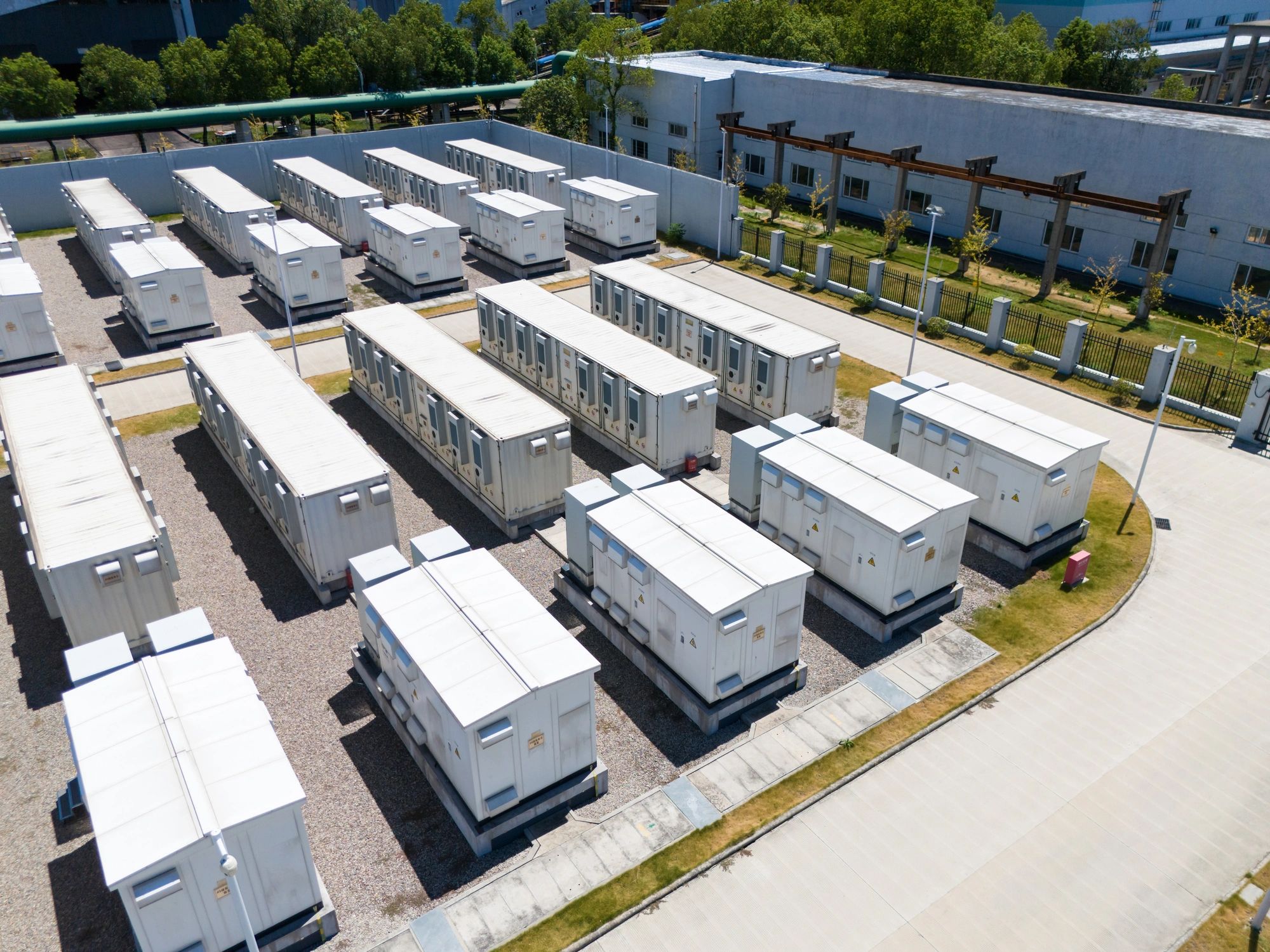
For many years, battery storage was largely viewed as a supporting feature of solar generation rather than a commercially important asset in its own right. The solar farm was considered the core infrastructure, while the battery was simply there to smooth intermittency, stabilise output, or satisfy grid requirements.
That thinking is now beginning to change quite significantly.
As utility-scale solar deployment continues to increase globally, the issue is no longer simply how cheaply electricity can be generated during daylight hours. Increasingly, the more important commercial question is what happens to the electricity that cannot be used at the exact moment it is produced.
In high-irradiation markets, particularly in parts of Africa, a solar plant may periodically generate substantial excess power during peak daylight hours. Yet if the grid cannot absorb all available generation at that time, part of the electricity effectively loses value. It may be curtailed, sold into lower-value daylight demand windows, or simply be wasted altogether.
This is where the investment logic surrounding battery storage begins to change materially.
The conversation is no longer only focused on the cost of the battery itself. Instead, developers, investors, and utilities are increasingly beginning to ask how much value is currently being lost without storage infrastructure in place.
Under that framework, Battery Energy Storage Systems (BESS) start to look less like supporting equipment and more like standalone infrastructure assets capable of generating meaningful commercial value in their own right.
A properly structured battery system can absorb excess daytime solar production and release it later during higher-value evening demand periods. In doing so, it may improve overall project monetisation, reduce curtailment losses, support grid balancing, improve reliability, and enhance the commercial quality of renewable generation itself.
This shift may become particularly important across African energy markets.
Many African countries combine excellent solar irradiation with weaker grid flexibility, constrained transmission infrastructure, hydro vulnerability, and rapidly growing industrial demand. Under those conditions, the value of dispatchable stored energy can become extremely significant.
Zambia is an especially interesting example. The country possesses very strong solar resource potential while simultaneously facing periodic grid stress, rising mining-sector demand, and significant pressure for additional reliable generation capacity. In such an environment, battery storage may ultimately become valuable not merely because it supports solar generation, but because it improves the timing, reliability, and usability of the electricity supply itself.
That distinction matters enormously.
Historically, energy infrastructure was often judged primarily by how much generation capacity it could add to the system. Increasingly, however, infrastructure quality is being judged by how reliably electricity can be delivered when it is actually needed.
This is one of the reasons battery technology is attracting growing strategic attention globally.
Lithium Iron Phosphate (LFP) chemistry has improved durability, thermal stability, cycle life, and cost predictability for utility-scale stationary storage applications. At the same time, battery costs have fallen materially over the past decade, allowing storage to move progressively closer toward mainstream infrastructure economics rather than niche demonstration projects.
The technology story itself is therefore becoming less controversial.
The larger challenge now increasingly relates to structure.
How the battery is financed, contracted, monetised, and integrated into the wider power system may ultimately determine whether projects become commercially successful. In some cases, it may even become sensible for battery infrastructure to operate through a separate Special Purpose Vehicle (SPV), distinct from the solar generation company itself.
That would represent a significant evolution in renewable infrastructure thinking.
Under such a structure, the battery would no longer be viewed purely as an accessory to generation but as a separate infrastructure platform capable of generating value through energy shifting, reliability services, grid support, industrial balancing, and improved system flexibility.
Particularly in markets where mining demand, transmission constraints, and hydro variability are all becoming increasingly important, the commercial role of battery infrastructure may expand very rapidly over the coming decade.
The next phase of African renewable development may therefore not simply be larger solar farms.
It may instead involve the emergence of integrated energy infrastructure systems where generation, storage, grid balancing, and energy management increasingly operate together as coordinated commercial platforms.
In that environment, battery storage is no longer simply supporting renewable energy projects.
Increasingly, it may become one of the most strategically valuable parts of them.